
“Diving into the Depths of Dharma, Dissecting Spiritual Logic.”
What is Ngejot? (The Daily Offering After Cooking)
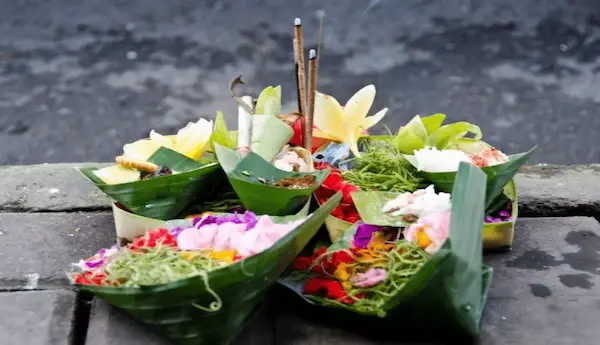
Ngejot, also known as Mesaiban or Yadnya Sesa, is the sacred act of offering a small portion of food to the Divine after we finish cooking. The primary purpose is to express our gratitude to God for the gift of sustenance and to ensure we receive the maximum spiritual benefit from the food we consume.
In the Bhagavad Gita (Chapter 3, Verse 13), it is stated:
“The righteous who eat the remnants of sacrifice are freed from all sins, but those unholy people who cook only for their own pleasure, truly eat only sin.”
The Simple Elements of Saiban
A Banten Saiban is the simplest form of Yadnya (sacrifice). You do not need elaborate materials. A small piece of banana leaf with a pinch of rice and salt is sufficient—side dishes are optional.
While a perfect offering is accompanied by a sprinkle of clean water and a lit incense stick as a “witness,” the simplicity of the offering does not diminish the spiritual merit (Pahala) you receive.
The 5 Sacred Locations for Offerings
According to the Manawa Dharmasastra, there are five essential places to place your Yadnya Sesa, symbolizing the Panca Maha Bhuta (The Five Elements):
- Pertiwi (Earth): Placed at the house entrance or gate.
- Apah (Water): Placed at the well or water source.
- Teja (Fire): Placed in the kitchen, on the stove or hearth.
- Bayu (Air/Wind): Placed where rice or food is stored.
- Akasa (Ether): Placed at the household shrine (Pelangkiran or Pelinggih).
Why these locations? These are places where we unintentionally commit Himsa Karma (harm to living beings like small insects or plants) during our daily chores. Performing Yadnya Sesa helps cleanse the spiritual “debts” or sins incurred during meal preparation.
Daily Prayers for Yadnya Sesa (Mesaiban)
1. General Prayer to the Divine (Ista Dewata)
For the water source, kitchen, rice storage, and household shrine:
Mantra: “OM ATMA TAT TWATMA SUDHAMAM SWAHA, SWASTI SWASTI SARWA DEWA SUKHA PRADHANA YA NAMAH SWAHA.”
Meaning: “O Lord, as the Supreme Soul of all souls, may all Your celestial creations (Devas) be blessed with happiness.”
2. Prayer to the Elemental Energies (Bhuta Kala)
For the ground or earth (Pertiwi):
Mantra: “OM ATMA TAT TWATMA SUDHAMAM SWAHA, SWASTI SWASTI SARWA BHUTA, KALA, DURGHA SUKHA PRADANA YA NAMAH SWAHA.”
Meaning: “O Lord, You are the Supreme Soul. May all Your creations in the form of Bhuta, Kala, and Durga be blessed with happiness.”
Specific Prayers for Daily Locations
| Location | Mantra | English Meaning |
| Rice Storage | Om Sri Dewya Namah Swaha | O Lord, in Your form as the Goddess of Prosperity (Sri), I bow to You. |
| Stove / Kitchen | Om Sang Hyang Tri Agni Ya Namah Swaha | O Lord, in Your form as Agni (Fire), the source of energy and light, I bow to You. |
| Water Source / Well | Om Gangga Dewa ya Namah Swaha | O Lord, in Your form as Goddess Ganga (Pure Water), I bow to You. |
| Household Shrine | Om Om Dewa Datta Ya Namah Swaha | O Lord, in Your form as the source of life (Purusa Pradhana), I bow to You. |
Prayers for the Ancestral Shrine (Merajan)
- Family Temple (Kemulan/Taksu): Om Ang, Ung, Mang Paduka Guru Ya Namah Swaha (I bow to the Divine Teacher).
- Wealth Shrine (Sri Sedana): Om Kuwera Dewa Ya Namah Swaha (I bow to Lord Kuwera, the guardian of wealth).
- Guardians of the Gate: Om Sang Hana Dora Kala Ya Namah (I bow to the guardian of the entrance).
Conclusion
Understanding and practicing these simple daily prayers brings a sense of mindfulness and sacredness to our domestic life. It reminds us that every meal is a gift and every action has a spiritual consequence.
May this guide be useful for all seekers of Dharma.
Om Shanti, Shanti, Shanti, Om.
Source: paduarsana.com – Pasraman Ganesha Watch the video on our YouTube channel: https://youtu.be/vvLYxI4wsfE







Tinggalkan Balasan