
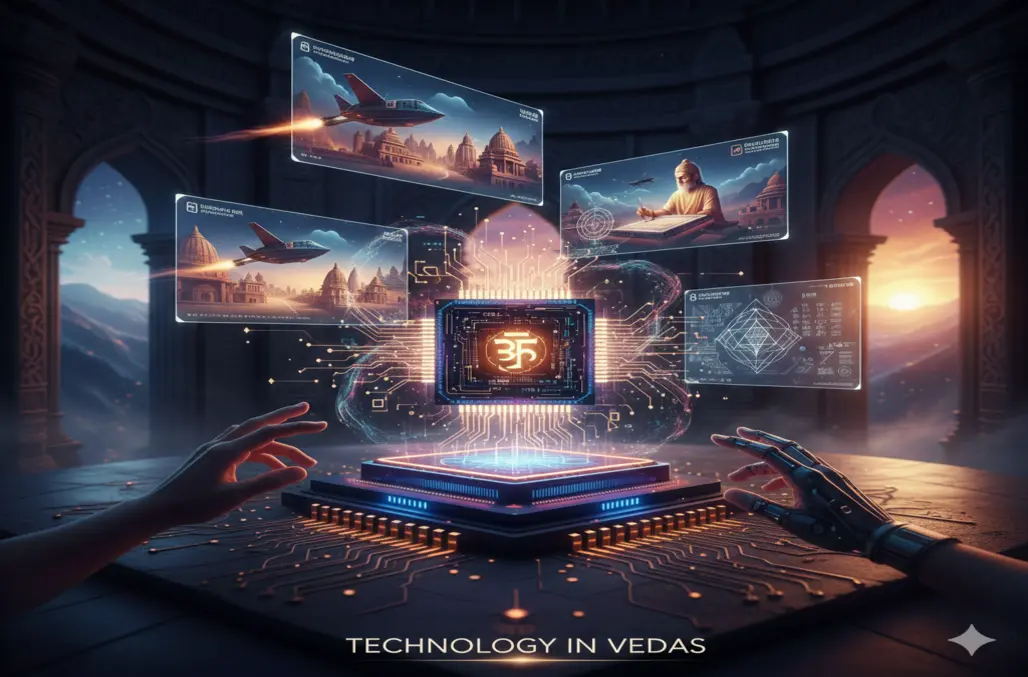
The 33 Devas in the Vedic Scriptures: A Comprehensive Guide
A detailed explanation of the 33 Devas according to the Vedas.
In Hinduism, the Devas (such as Varuna, Agni, and Vayu) govern the elements of nature like water, fire, and wind. They manifest as divine entities below the degree of the Supreme God. They are not equal to or independent of the Almighty; rather, they are manifestations of God (Brahman) Himself. Each Deva and Devi has their own unique function and role.
The Functions and Roles of the Devas
The Vedic scriptures state that the Devas cannot move freely without the will of God. They cannot grant boons or blessings without Divine sanction. Like all other living beings, the Devas depend entirely on the will of the Almighty.
In common Hindu traditions such as Advaita Vedanta and Agama Hindu Dharma, Devas are viewed as manifestations of Brahman. They are not worshipped as independent Gods, and they are considered equal in status to one another. However, in Dvaita philosophy, certain sects worship specific Devas as the supreme deity, embodying a form of monotheism centered on a particular manifestation.
The 33 Devas in the Vedic Scriptures
From His nature as Saguna Brahman (God with form), the Almighty manifests Himself in various divine forms as Devas and Devis. The word Deva is derived from the root div, which means “light” or “sacred radiance.”
While Hindu society recognizes numerous names of deities, the Vedas specifically mention 33 primary Devas, each with distinct duties:
“O Supreme Lord, You are the great teacher, full of wisdom, bestowing grace upon those who shine brightly; may the seekers of spiritual knowledge know the secret of the 33 Devas.”
According to Rigveda I.139.11, these 33 Devas are categorized by their realms:
“O Devas (33 Devas): 11 in heaven, 11 on earth, and 11 in the sky, may you rejoice in this sacred offering.”
Furthermore, the Satapatha Brahmana (XIV.5) clarifies:
“Indeed, He says: there are 33 powerful and mighty Devas. Who are they? They are the 8 Vasus, 11 Rudras, and 12 Adityas. That makes 31; then adding Indra and Prajapati, the total becomes 33 Devas.”
Complete List of the 33 Devas (Trayastrimsha)
The division is based on the 8 Vasus (Elemental Nature), 11 Rudras (Vital Forces), 12 Adityas (Solar Principles), as well as Indra and Prajapati.
1. The 8 Vasus (Fundamental Elements of Life)
Vasus are the deities who support the universe (earth and atmosphere):
- Dhara/Prithvi: The Earth element.
- Anala/Agni: The Fire element.
- Anila/Vayu: The Wind element.
- Apa: The Water element.
- Prabhas/Dyaus: The Light/Sky element.
- Soma: The Moon (Plant energy/The Mind).
- Dhruva: The Pole Star (Fixedness/Direction).
- Pratyusha: The Dawn (Morning energy).
2. The 11 Rudras (Vital Energy & Transformation)
In the Vedas, the Rudras represent the 10 Pranas (vital energies within the body) and the 11th is the Atman (The Self):
- 5 Primary Pranas: Prana, Apana, Vyana, Samana, Udana.
- 5 Secondary Pranas (Upapranas): Naga, Kurma, Krikala, Devadatta, Dhananjaya.
- 1 Atman: The Soul/Self.(Note: When these vital energies leave the body, they cause grief to those left behind; hence they are called “Rudra,” meaning “The Cause of Tears.”)
3. The 12 Adityas (Principles of Time & Ethics)
The Adityas are the sons of Aditi, representing the 12 months of the year and social-ethical aspects:
- Ansh: Distributer of earnings.
- Aryaman: Nobility/Law of Marriage.
- Bhaga: Fortune/Prosperity.
- Dhatri: The Creator/Health.
- Indra: Leadership/Courage.
- Mitra: Friendship/Honesty.
- Pushan: Guardian of Paths/Cattle.
- Savitri: The Word/Enlightenment.
- Tvashtri: Divine Architect/Skill.
- Varuna: Natural Law/The Cosmos.
- Vishnu: The Preserver/Cosmic Steps.
- Vivasvan: Solar Radiance.
4. The 2 Final Devas
- Indra: Represents the power of Will and Lightning (often referred to as Loka-pala).
- Prajapati (Brahma): Represents the principle of creation and collective intelligence.
| Deva Group | Primary Manifestation | Energy Represented |
| 8 VASUS | Material & Physical | Earth, Fire, Wind, Water, Light, Moon, Pole Star, Dawn. |
| 11 RUDRAS | Biological & Transformative | The 10 Vital Pranas and the Soul (Atman). |
| 12 ADITYAS | Temporal & Ethical | The 12 months, justice, and cosmic truth. |
| 2 FINISHERS | Will & Creation | Willpower (Indra) and Creative Intelligence (Prajapati). |
As mentioned in the Bhagavad Gita, these Devas are manifestations of the Supreme:
“Among the Rudras I am Shankara (Shiva)… among the Vasus I am Fire (Agni)… among the Adityas I am Vishnu.” (Bhagavad Gita 10.21-23).
Spiritual Science Analysis: Devas and the Universe
Understanding Devas through the Lens of Modern Science
The concept of the 33 Devas is not polytheism, but an intelligent classification system of how the universe operates:
- The Physics Aspect (8 Vasus): These are the fundamental elements of matter. Without the Vasus, there would be no stage for life to exist.
- The Biology Aspect (11 Rudras): The Rudras represent the electrical currents and vital energies within the body. Their departure marks the end of physical life.
- The Astronomy & Ethics Aspect (12 Adityas): These symbolize the passage of time and the law of cause and effect—the “operating system” that keeps the cosmos in harmony.
Conclusion: One Source, Diverse Functions
Studying the 33 Devas does not mean we worship separate entities. The Rig Veda (1.164.46) affirms:
“Ekam Sat Vipra Bahudha Vadanti”
(Truth is One, but the wise call it by many names.)
Just as one sun is reflected in 33 different mirrors, the one God manifests through 33 natural functions to govern the universe. Understanding the Devas is a way to honor the Divine Laws that work around us every day.
Frequently Asked Questions (FAQ)
1. Do Hindus worship 33 million gods?
No. The number “33 Koti” is often mistranslated as 33 million. In ancient Sanskrit, “Koti” means “type” or “class.” Therefore, the Vedas refer to 33 types of divine manifestations, not 33 million separate entities.
2. Who are the 33 Devas in the Vedas?
They consist of the 8 Vasus (Nature Elements), 11 Rudras (Vital Energies), 12 Adityas (Solar/Temporal Principles), along with Indra and Prajapati.
3. Are Devas equal to the Supreme God?
In Vedic theology, Devas are manifestations or “celestial officials” of the Supreme God (Brahman) who govern the laws of nature. God is the One Source (Ekam Sat), while the Devas are His sacred radiance performing specific cosmic functions.
References:
- Rig Veda Samhita – Mandala 1, Hymn 139, Verse 11.
- Satapatha Brahmana – Kanda XIV, Adhyaya 5 (Madhyandina Recension).
- Aitareya Brahmana – Explanation of the 33 Devas.
- Bhagavad Gita – Chapter 10 (Vibhuti Yoga).
- Swami Vivekananda – The Complete Works, Volume 2: The Cosmos and The Microcosm






Tinggalkan Balasan