
Catur Marga Yoga: The Four Paths of Dharma in Hindu Teachings
Definition of Catur Marga Yoga: Catur means four, Marga means path/way or effort, and Yoga is derived from the root word Yuj, meaning to connect oneself. Therefore, Catur Marga Yoga represents the four paths or methods for Hindus to reach the path of the Supreme God / Ida Sang Hyang Widhi Wasa.
Introduction
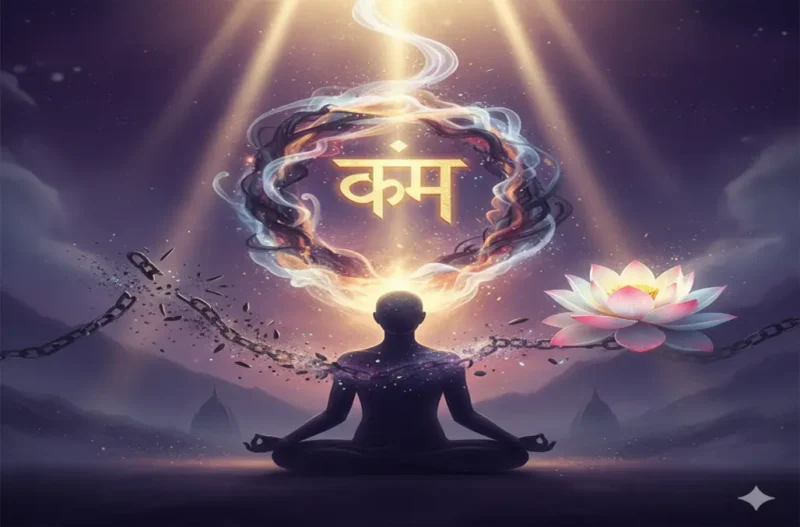
Catur Marga or Catur Yoga are the four paths for Hindus to honor and draw closer to God Almighty. This teaching is found in the sacred scripture Bhagavad Gita, particularly in the Trayodhyaya concerning Karma Yoga. It serves as a system that distinguishes between Subha Karma (good deeds) and Asubha Karma (unskilled deeds), which are further divided into Akarma (inaction) and Wikarma (erroneous action).
In the Bhagavad Gita, 7:21, it is mentioned:
“Yo-yo yàý- yàý tanuý bhaktaá úraddhayàrcitum icchati, tasya tasyà calàý úraddàý tàm eva vidadhàmy aham”
Meaning: “Whatever form a devotee desires to worship with faith—even if they are pursuing worldly pleasures or worshipping demigods and natural forces—if they are firm in their faith, I make that faith of theirs unwavering.”
Objectives of Catur Marga Yoga
The four paths within Catur Marga Yoga share the same goal: to achieve perfection in the union of Jiwatman (individual soul) and Paramatman (Supreme Soul).
- Jnana Yoga is intended for those with a strong inclination toward science and knowledge.
- Bhakti Yoga is for those strong in love and devotion.
- Karma Yoga is for those strong in action and work.
- Raja Yoga is for those strong in psychological and meditative practice.
1. Karma Yoga (The Path of Action)
Karma Yoga is a system of teachings that distinguishes between Subha Karma and Asubha Karma. “Karma” holds two meanings: karma related to rituals (Yajna) and karma in the sense of conduct/behavior.
Bhagavad Gita 3.5 states:
“No one can remain even for a moment without performing some action. Everyone is driven to act according to the qualities (Gunas) born of their nature.”
Bhagavad Gita 3.8 reaffirms:
“Perform your prescribed duties, for action is better than inaction. Indeed, you cannot even maintain or sustain this physical body without working.”
Karma Marga is the path to achieving Moksha by emphasizing devotion through selfless work, performed without attachment to personal gain.
2. Bhakti Yoga (The Path of Devotion)
Bhakti Yoga involves worshipping God in abstract forms (Nirguna) and manifest forms (Saguna), such as through Arca, Pelinggih, or Pratima. There are generally two forms of Bhakti, both sharing the same quality and goal:
- Aparabhakti: Practiced by devotees whose intelligence and spiritual awareness are at a low or moderate level. It involves worship with various worldly requests due to limited knowledge of the essence of Bhakti.
- Parabhakti: Practiced by devotees with higher intelligence and spiritual consciousness. It is a form of sincere and total self-surrender to Him.
The 9 Paths of Devotion (Navavidha Bhakti):
- Listening to the stories of God (Shravanam)
- Chanting the glories of God (Kirtanam)
- Remembering the Names of God (Vishnusmaranam)
- Serving the holy feet of God (Padasevanam)
- Worship/Ritual (Archanam)
- Prostration/Sembah Sujud (Vandanam)
- Servitude/Devoted service (Dasyam)
- Friendship with the Divine (Sneham)
- Total surrender of the self to God (Atmanivedanam)
3. Jnana Yoga (The Path of Knowledge)
Jnana Yoga means uniting the Jiwatman with the Paramatman through studying and practicing both scientific and spiritual knowledge, such as the truth about Brahman and Atman. Through true knowledge, one can free themselves from worldly bonds.
Three essential elements in this teaching:
- Singleness of mind (focus).
- Self-restraint in life.
- A balanced or calm state of the soul.
The 7 Stages of Knowledge (Jnana Bhumika):
- Aspiration for truth (Subhecha)
- Philosophical inquiry (Vicarana)
- Refinement of the mind (Tanumanasi)
- Attainment of light/purity (Sattwatti)
- Inner detachment (Asamsakti)
- Spiritual vision (Padarthabhawana)
- Supreme liberation (Turiya)
4. Raja Yoga (The Path of Meditation)
Raja Yoga is a spiritual path to reach Moksha through meditation and psychological discipline. While this path can lead to Moksha more quickly, the challenges are much heavier. A practitioner on this path is required to have a Perfect Spiritual Guru to guide them correctly.
Catur Marga Yoga FAQ
What is Catur Marga Yoga?
What are the four paths in Catur Marga?
Is a Spiritual Guru necessary for Raja Yoga?
Read also The Atma’s Journey to the Afterlife: Perspectives from the Vedas, ISKCON, and Balinese Tradition




Tinggalkan Balasan