
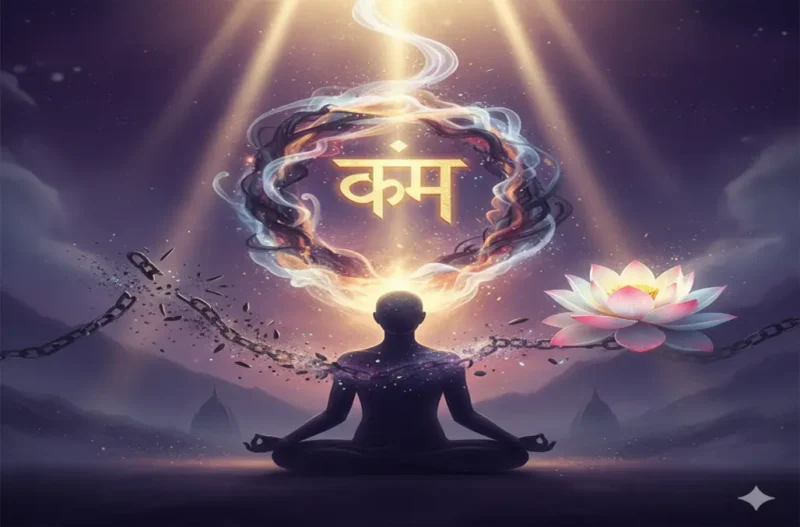
The Atma’s Journey to the Afterlife: Perspectives from the Vedas, ISKCON, and Balinese Tradition
- Hindu Eschatology: The Soul’s Transition in Vedic, ISKCON, and Balinese Perspectives
- 1. Vedic Perspective: The Paths of Devayana and Pitryana
- 2. ISKCON Perspective: Krishna Consciousness and Yamaraja’s Judgment
- 3. Balinese Hindu Perspective: The Atma’s Journey in Lontar Manuscripts
- Comparative Summary Table
- Logical Analysis and Philosophical Conclusion
- Frequently Asked Questions (FAQ)
- References:
- Bibliography:
Hindu Eschatology: The Soul’s Transition in Vedic, ISKCON, and Balinese Perspectives
In Hindu theology, death is not an end but a grand transition for the soul (Atman). This journey is absolutely influenced by the laws of Karma (actions) and Samskara (mental impressions). This article summarizes the post-mortal journey from three authoritative theological lenses: the Vedas as the foundation, ISKCON as the representative of the Bhakti school, and Balinese Hinduism as a harmonious blend of sacred texts and local wisdom.
The Atma’s journey to the afterlife is a profound eschatological narrative, often filled with imagery of post-death obstacles and the quest for eternal peace. However, beneath these narratives lies a dynamic philosophical foundation, especially when viewed through the lens of the Bhagavad-gita. This sacred text serves not only as a moral guide but as the source for various interpretations that shape our understanding of the soul’s ultimate destination.
Through this exploration, we see how a single source of truth can give birth to diverse views: from the concept of identity dissolution in Advaita Vedanta, the depth of personal relationship with the Divine in the ISKCON vision, to the practical and harmonious implementation in Balinese Hindu Tradition. By studying this diversity, we are invited to see that the journey of the Atma is not merely a change in location, but an evolution of consciousness uniquely understood by various schools of Hindu thought.
1. Vedic Perspective: The Paths of Devayana and Pitryana
Primary sources such as the Chatur Vedas and Upanishads lay the philosophical groundwork that the soul’s journey is determined by one’s level of spiritual awareness.
- Separation of the Soul (Bṛhadāraṇyaka Upaniṣad): At the moment of death, the top of the heart illuminates, lighting the exit path for the Jivatman. The soul may exit through the crown of the head (for yoga practitioners) or other bodily orifices.
- Two Main Paths (Chandogya Upanisad):
- Devayana (Path of Light/The Gods): For those who have achieved self-realization. The soul passes through realms of light toward Brahmaloka and does not return to the cycle of birth (Moksha).
- Pitryana (Path of Ancestors/Smoke): For souls still bound by worldly desires. The soul goes to Pitrloka (ancestral realm), stays temporarily, then descends back to earth through rain and plants for reincarnation.
- The Role of Lord Yama: In the Rig Veda, Yama is the first mortal to die and blaze the trail for humanity. He acts as the ruler maintaining order in the transitional realm.
2. ISKCON Perspective: Krishna Consciousness and Yamaraja’s Judgment
The teachings of ISKCON (Gaudiya Vaishnava) emphasize personalism and the importance of the final moment (Anta-kale).
- Importance of Remembering God: Based on Bhagavad-gita As It Is (8.6), the state of mind at death determines the next body. If one remembers Krishna, they immediately reach Vaikuntha (the spiritual sky).
- The Proccess of Yamaduta: For those living in sin, the Srimad Bhagavatam (Canto 3) explains that the soul is forcibly taken by the terrifying Yamadutas (messengers of Yama). The soul is then dragged on a long, painful journey to the region of Yamaraja.
- The Court of Karma: Before Yamaraja, all life records are reviewed. Depending on their sins, the soul may be sent to hellish planets (Naraka) for purification before eventually being granted a new body on earth according to the laws of nature.
3. Balinese Hindu Perspective: The Atma’s Journey in Lontar Manuscripts
Hindu theology in Bali provides very detailed visual and ritualistic imagery regarding what happens after the Panca Maha Bhuta (five material elements) are released.
- Lontar Atma Prasangsa: This text dramatically depicts the Atma’s journey passing through various obstacles as a form of purification.
- Titi Ugal-Agil: A narrow, wobbling bridge over a crater of fire. Only souls with virtue can cross it calmly.
- Pohon Curiga: A tree with sharp leaves that torture those who frequently hurt others during their lifetime.
- The Role of Sang Hyang Suratma: In Balinese belief, Sang Hyang Suratma records “sins” and “merits” (punya). He reads the report before Bhatara Yama before the Atma receives the verdict: whether to enjoy Swarga (Heaven), suffer in Neraka (Hell), or immediately Numitis (reincarnate).
- The Importance of Pitra Yadnya: In Bali, the journey of the Atma is considered incomplete without Ngaben. This ceremony aims to sever the Atma’s ties with the physical body so the journey to the ancestral realm becomes lighter.
Comparative Summary Table
| Dimension | Vedas (Advaita) | ISKCON (Vaishnava) | Balinese Hindu |
| Main Term | Moksha / Brahman | Vaikuntha / Goloka | Amoring Acintya |
| Identity Status | Merging (Non-Dual) | Spiritual Individual (Dual) | Holy Ancestor / Merged |
| Nature of Destination | State of Consciousness | Real Spiritual Planet | Sunya / Siwa Loka |
| Key to Achievement | Jnana (Knowledge) | Bhakti (Devotion) | Yadnya & Karmaphala |
Logical Analysis and Philosophical Conclusion
1. The Theory of Space: Will the Spiritual Realm Get Crowded?
Spiritual dimensions are Infinite. In the Isopanisad, it is stated that God is perfect and complete, and thus His creation is limitless. Spiritual energy does not occupy space like material atoms; it exists beyond physical dimensions. In the Balinese concept of Sunya (Emptiness), there is no concept of volume or density.
2. The Theory of Activity: What Does the Soul Do?
In ISKCON, activities are called Lila (Divine Play). The soul acts out of pure love—dancing, singing, and interacting with the Divine without fatigue. In Advaita, the soul exists in a state of Samadhi, a static yet blissful contemplation.
3. The Nature of Ego: Is the Desire for Bliss an Attachment?
The Vedas distinguish between Ahamkara (False Ego) and Svarupa (Original Nature). Searching for happiness is not a “desire” of the ego, but the Dharma of the Soul. Just as water is naturally wet, the soul is naturally blissful (Ananda). Reaching for bliss is simply the soul returning to its original state.
Closing Statement:
The journey of the Atma is a transition from “the temporary” to “the eternal.” Whether one believes in total merging (Advaita) or eternal relationship (Bhakti), both demand the same prerequisite: Self-purification in this world.
Ekam Sat Vipra Bahudha Vadanti “Truth is one, but the sages describe it in various ways.”
Tat Twam Asi
Understand more deeply the essence of the union between Atma and Brahman in the great Upanisadic dictum: “Thou Art That”.
Explore Complete Material →Frequently Asked Questions (FAQ)
1. What is the Atma’s journey to the afterlife according to Hindu Vedas?
According to the Vedas, the soul follows two main paths: Devayana (the path of light toward Moksha) or Pitryana (the path of ancestors leading back to reincarnation), determined by spiritual consciousness.
2. How does the ISKCON perspective explain the judgment of the soul?
In ISKCON (Gaudiya Vaishnavism), the soul is judged by Lord Yamaraja. Those with spiritual consciousness reach Vaikuntha, while others may face purification in Naraka before reincarnation.
3. What are the obstacles in the Atma’s journey in Balinese Hindu tradition?
Balinese tradition describes obstacles like the “Titi Ugal-Agil” (wobbly bridge) and “Pohon Curiga” (sharp tree) as forms of purification before the soul merges with the divine (Amoring Acintya).
References:
- Svetasvatara Upanisad (The Interaction between the Soul and Nature).
- Taittiriya Upanisad (The Essence of Bliss/Ananda).
- Chandogya Upanisad (The Original Form of the Atma).
- Lontar Atma Prasangsa (Traditional Balinese Eschatology).
- Srimad Bhagavatam (Spiritual Cosmology) – View Online
- Bhagavad-gita As It Is by A.C. Bhaktivedanta Swami Prabhupada – Read Online
- Bṛhadāraṇyaka Upaniṣad.
- Garuda Purana (Saroddhara).
- Lontar Yamadhipati Tattwa and Atma Prasangsa.
- An in-depth study of the ethics of Karma and the judgment of Lord Yama in the spiritual realm (Niskala), published in E-Journal UNUD.
Bibliography:
- Radhakrishnan, S. (1992). The Principal Upanisads. HarperCollins.
- Prabhupada, A.C. Bhaktivedanta Swami. (1972). The Nectar of Devotion. Bhaktivedanta Book Trust.
- Wiana, I Ketut. (2006). Moksha: The Ultimate Goal of Hinduism. Paramita Surabaya.
- Zoetmulder, P. J. (1991). Manunggaling Kawula Gusti. (For the philosophical context of soul unification in the Indonesian archipelago).





Tinggalkan Balasan