
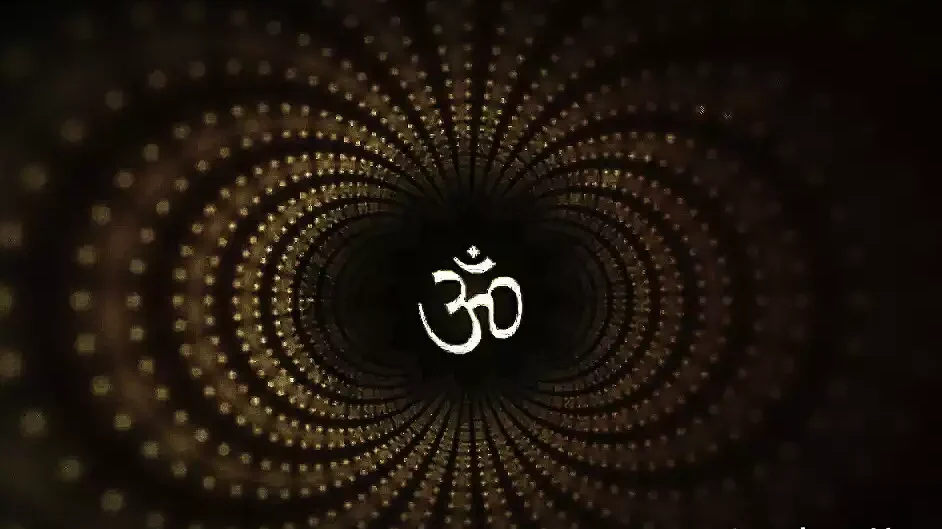
The Sacred Symbol OM: Meaning, Philosophy, and the Cosmic Vibration
The Sacred Symbol OM: Long before scripts were written and languages created, the universe began with a single vibration that shattered the cosmic silence. In the sacred Hindu tradition, this primordial vibration is known as OM—a sound without beginning or end that encompasses the entire pulse of life. More than just an aesthetic symbol or a mantra’s prefix, OM is a visual representation of the Divine (Brahman) and a map of human consciousness. To understand the meaning of OM is to dive into the secrets of creation, connecting ourselves with the infinite frequency of the universe itself.
- A Complete Guide to Understanding Pranava: The Primordial Sound of Creation
- The Anatomy of The Sacred Symbol OM: 5 Levels of Consciousness
- The Mystery of the Three Sounds: A – U – M
- The Sacred Symbol OM in the Bhagavad Gita
- Ongkara: The Balinese Version of the Sacred Symbol OM
- The Power of Vibration in Science
- FAQ About The Sacred Symbol OM:
A Complete Guide to Understanding Pranava: The Primordial Sound of Creation
Interestingly, in this modern era, researchers have found that the frequency of the OM sound resonates with the natural vibrational patterns of the Earth, providing a healing effect. Known as Pranava or the holy sound, OM is the bridge connecting the science of vibration with the spiritual depth of the Vedas. Whether you find it above the gates of a Balinese temple as Ongkara, or as a Sanskrit character in India, this symbol carries the same message: absolute unity. Its vibration is scientifically proven to provide real tranquility, lowering stress levels and maintaining mental health amidst the hustle and bustle of the world.
In every beginning of prayer and end of meditation, this one sacred syllable always echoes as the “Mother of all Mantras,” containing the essence of all Vedic scriptures. But what exactly is the meaning behind its mysterious curves? Why does Sri Krishna in the Bhagavad Gita refer to it as His own identity? From the Mandukya Upanishad’s explanation of the levels of consciousness to the philosophy of Panca Mahabutha in the Balinese Ongkara, let us explore why the sacred symbol OM is the master key to achieving spiritual enlightenment and harmony in life.
The Anatomy of The Sacred Symbol OM: 5 Levels of Consciousness
Before the universe was created, there was only the void of pure existence without vibration. From this void emerged the primordial vibration known as OM. In Hindu tradition, OM is called Pranava—the source of all mantras and the initial seed of all creation, known as Shabda-Brahman (God in the form of sound).
The visual form of the OM character serves as a map of human consciousness according to the Mandukya Upanishad:
- Lower Curve: Represents Jagrat (The Waking State).
- Middle Curve: Represents Swapna (The Dreaming State).
- Upper Curve: Represents Susupti (The State of Deep Sleep).
- The Dot (Bindu): Represents Turiya (Absolute Consciousness/Oneness).
- The Semicircle: Represents Maya (The worldly illusion that separates us from the Divine).
The Mystery of the Three Sounds: A – U – M
The syllable OM is pronounced as A-U-M, representing the supreme energies of the Trimurti:
- A (Akara): Symbolizes Lord Brahma as the Creator.
- U (Ukara): Symbolizes Lord Vishnu as the Preserver.
- M (Makara): Symbolizes Lord Shiva as the Dissolver.
The Sacred Symbol OM in the Bhagavad Gita
Sri Krishna affirms the position of OM as a representation of Himself in several key verses:
- Bhagavad Gita 7.8:“I am the taste in water, the light of the sun and the moon. I am the sacred syllable OM (Pranava) in all the Vedas.”
- Bhagavad Gita 17.24:“Therefore, those who strive to attain Brahman always begin every spiritual act—sacrifice, charity, and penance—with the utterance of OM.”
Ongkara: The Balinese Version of the Sacred Symbol OM
In Bali, the writing of OM is known as Ongkara. Its form holds a philosophy related to the Panca Mahabutha (The Five Elements of Nature):
- Nada (The Dot): The element of Bayu (Air/Wind).
- Windu (The Circle): The element of Teja (Fire).
- Arda Chandra (The Crescent): The element of Apah (Water).
- Number 3 Shape: The element of Akasa (Space/Ether).
- Tarung (The Tail): The element of Pertiwi (Earth).
The Power of Vibration in Science
Scientifically, chanting OM produces a frequency that harmonizes with nature. Its vibration helps calm the mind, lower blood pressure, and increase concentration. It is highly recommended for those experiencing insomnia or chronic stress.
FAQ About The Sacred Symbol OM:
- Can non-Hindus chant OM?Yes. OM is a universal vibration belonging to the universe. Anyone can chant it to experience inner peace.
- Why do mantras always start with OM?The goal is to synchronize one’s own frequency with the Divine frequency before offering prayers (serving as a purifying sound).
- What is the difference between the Indian OM and Balinese Ongkara?The script forms differ according to local culture, but the pronunciation and meaning remain the same: the symbol of the highest energy.
References & Attributions:
- Mandukya Upanishad – Explanation of the Levels of Consciousness.
- Babad Bali. Philosophy of the Ongkara Script. babadbali.com.
- Spiritual Book Collection: PujaShanti Hindu Bookstore.




Tinggalkan Balasan