
Is it possible to pray when you are in trouble? See the following explanation according to Hindu literature
The explanation of this rule is not without basis. Some of the literature that is the main reference in understanding Cuntaka include:
In Hindu religious life in Bali, the term Cuntaka or Sebel is often considered something that is frightening or limiting. However, if we delve deeper into the literary sources, Cuntaka is actually a form of respect for purity and a natural mechanism to maintain the balance of inner energy.

What is a Cuntaka?
Literally, Cuntaka comes from the root meaning impure or a spiritually dirty state. According to Lontar Catur Agama , Cuntaka is a change in a person’s purity status caused by a certain life event, which makes him temporarily not allowed to enter the sacred area or perform physical ritual rituals.
Main Literature References
- Lontar Agastya Parwa: Discusses the essence of inner worship (Manasika).
- Lontar Catur Agama: Set the classification and duration of Cuntaka time for each event.
- Lontar Yama Purana Tattwa: Specifically discusses rules related to death and obligations for relatives left behind.
Literary References About Cuntaka
Agastya Parva’s Lontar
“Manasika puja ngarania, puja ring manah, haywa wera, nitya karia.”
Explanation: This literature asserts the concept of Manasika Puja or worship through the mind. This is the basis that in the condition of Cuntaka, the spiritual relationship with God is not broken; although it is physically forbidden to perform vocal rituals or enter sacred areas, inner worship is still valid and recommended.
Lontar Catur Agama
“Iki lwir ning cuntaka, sahinganing adrewaya klesa, tan wenang manjing ring dewa kahyangan, amuja pitara, mwang amuja dewa.”
Explanation: This Lontar regulates the classification of klesa (inner impurities) and the ethics of entering holy places. The emphasis is on the protection of the pure vibration of Pura; a person who is during Cuntaka is prohibited from performing public physical rituals in order to maintain the purity of the mandala.
Lontar Yama Purana Tattwa
“Kadi mawak layuan, sapa sira sang keni cuntaka, haywa amuja pitra dewa, apan sang atma durung mresuddha.”
Clarification: this reference specifically addresses the death penalty. During the process of the return of the panca maha bhuta element to the universe, the family that was left behind was in a “sebel” condition. This literature orders focus on the purification of the Atma before the family returns to being active in public worship rituals.
Cuntaka Time Classification Table
| Type of Print | Cause/Condition | General Duration |
|---|---|---|
| Rajaswala | Women who are menstruating | Until it’s clean (after showering, shampooing/cleaning) |
| Ngembas (Birth) | Newly born mother | 42 Days (One month seven days Bali) |
| Death | Nuclear family/deceased relatives | Until the leaving ceremony is over |
| Karuron | Women who have had a miscarriage | Minimum 42 days or according to Sulinggih instructions |
| Pawiwahan | Groom during the wedding process | Until the Mabyakala/Meprayascita ceremony is performed |
| Salah Pati / Ulah Pati | Unnecessary death (accident/suicide) | Requires a special purification ceremony (Pemelaspas Desa) |
*Note: The duration above can be adapted to Kala Patra Village (local tradition) as well as instructions from Sulinggih or Pinandita in their respective regions.
💡 The Truth of Cuntaka in Spiritual Discipline
It should be understood that Cuntaka status is not a punishment or a form of discrimination in Hindu teachings. On the other hand, Cuntaka is a spiritual mechanism to maintain energy harmony between ourselves ( Bhuwana Alit ) and the sacred environment ( Bhuwana Agung ).
Metaphysically, a person who is in Cuntaka time—either because of biological processes or grief events—is experiencing an unstable or vulnerable state of inner energy. The restriction not to enter the main area of the holy place is intended to give time for oneself to perform recovery while also keeping the sacred vibration of the Pura awake from the influence of external energy that is “hot” (sebel).
“The Cuntaka period always ends with a process of self-purification, starting from physical cleansing to praying Tirta Penglukatan as a symbol of the return of self-purification to return to activities in public rituals.”
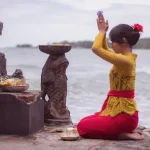
For the people who are in this time, continue to take care of Sradha (faith) through Manasika Puja (prayer in the heart). Because in reality, Sang Hyang Widhi Wasa is always present and listens to the prayers of each of His servants without being limited by the barriers of physical conditions.
Questions About Cuntaka
Is Cuntaka the same as sinning?
Nope. Cuntaka is a physical and energetic change in purity status due to natural events (such as birth, death, or menstruation), not due to moral transgression or sin.
Why are menstruating women prohibited from going to the temple?
Based on Lontar Catur Agama, this aims to protect the purity of the Pura mandala from the vibrations of biological changes that are considered “hot”. This is a form of spiritual discipline to maintain the sanctity of the place of worship.
How to purify yourself after the Cuntaka period is over?
It is generally done by taking a shampoo bath (physical cleansing) and then continuing by asking for Tirta Penglukatan or the Mebyakala/Prayascita ceremony according to the type of Cuntaka experienced.
Related References & Resources
- [Literature] Lontar Agastya Parwa. Bali Cultural Documentation Center Collection. (Discussing the nature of Manasika Puja).
- [Literature] Religious Chess Throw. (Guidelines for the classification of Cuntaka and the sanctity of holy places).
- [Literature] Lontar Yama Purana Tattwa. (Stipulations on Cuntaka’s death and release of Panca Maha Bhuta).
- [Seminar Results] Collection of Results of the Seminar on the Interpretation of Aspects of Hinduism I – XV. Central PHDI.
- [External Link] Parisada Hindu Dharma Indonesia (PHDI) Center – Official authority on Hindu religious interpretation in Indonesia.
- [External Link] Bali Provincial Cultural Office – Source of information on the preservation of Lontar manuscripts and customs.




Tinggalkan Balasan