
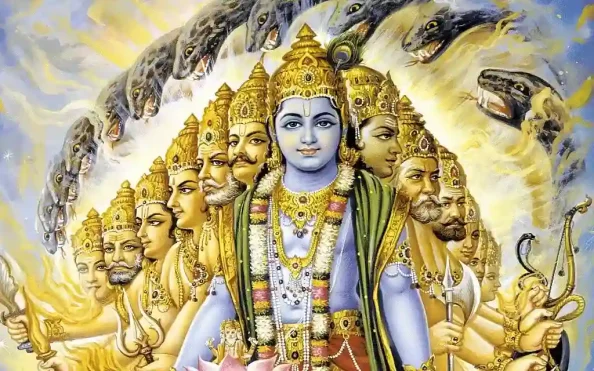
Bhagavad Gita Chapter 12 | The Path of Love Toward the Most Compassionate
Bhagavad Gita Chapter 12 – Bhakti Yoga, the Yoga of Devotion, elaborates on the path of loving service (Bhakti yoga). Pure and sacred devotion to God is the highest and most effective way to achieve divine love for the Almighty, the ultimate goal of spiritual life. Those who walk this supreme path can develop divine and sacred qualities within themselves.
Table of Contents
12:1 arjuna uvāca evaṁ satata-yuktā ye bhaktās tvāṁ paryupāsate ye cāpy akṣaram avyaktaṁ teṣāṁ ke yoga-vittamāḥ
“Arjuna asked: Between those who are ever steadfastly devoted to You and worship You, and those who worship the Imperishable and the Unmanifest, who is considered to be more perfect in Yoga?”
12:2 śrī-bhagavān uvāca mayy āveśya mano ye māṁ nitya-yuktā upāsate śraddhayā parayopetās te me yuktatamā matāḥ
Chapter 12:1 – 12:2 Perfection in Yoga: The Path of Devotion
“The Blessed Lord said: Those who fix their minds on Me and always worship Me with supreme faith and steadfast devotion, are considered by Me to be the most perfect in Yoga.”
Chapter 12:3 – 12:5 The Abstract Path: The Challenge of the Unmanifest
12:3-4 ye tv akṣaram anirdeśyam avyaktaṁ paryupāsate sarvatra-gam acintyaṁ ca kūṭa-stham acalaṁ dhruvam sanniyamyendriya-grāmaṁ sarvatra sama-buddhayaḥ te prāpnuvanti mām eva sarva-bhūta-hite ratāḥ
“But those who worship the Imperishable, the Indefinable, the Unmanifest, the All-pervading, the Inconceivable, the Changeless, the Immovable, and the Eternal—by restraining all their senses and maintaining equanimity toward everyone, while being engaged in the welfare of all beings—they also reach Me.”
12:5 kleśo ’dhikataras teṣām avyaktāsakta-cetasām avyaktā hi gatir duḥkhaṁ dehavadbhir avāpyate
“The path for those whose minds are attached to the Unmanifest is much more difficult; for the goal of the Unmanifest is attained with great hardship by those who are embodied.”
12:6-7 ye tu sarvāṇi karmāṇi mayi sannyasya mat-parāḥ ananyenaiva yogena māṁ dhyāyanta upāsate teṣām ahaṁ samuddhartā mṛtyu-saṁsāra-sāgarāt bhavāmi na cirāt pārtha mayy āveśita-cetasām
“But for those who surrender all their actions to Me, regarding Me as the Supreme Goal, and who worship Me with unswerving devotion and meditation—for them, O Partha (Arjuna), whose minds are fixed on Me, I quickly become the deliverer from the ocean of death-bound existence.”
Chapter 12:6 – 12:8 Total Surrender: Making God the Supreme Goal
12:8 mayy eva mana ādhatsva mayi buddhiṁ niveśaya nivasiṣyasi mayy eva ata ūrdhvaṁ na saṁśayaḥ
“Fix your mind on Me alone and let your intellect rest in Me; thus, you shall surely live in Me hereafter. Of this, there is no doubt.”
Chapter 12:9 – 12:12 The Spiritual Ladder: Four Methods to Attain Peace
12:9 atha cittaṁ samādhātuṁ na śaknoṣi mayi sthiram abhyāsa-yogena tato mām icchāptuṁ dhanañjaya
“If you are unable to fix your mind steadily on Me, O Dhananjaya (Arjuna), then seek to reach Me by the practice of repeated Yoga (Abhyasa-yoga).”
12:10 abhyāse ’py asamartho ’si mat-karma-paramo bhava mad-artham api karmāṇi kurvan siddhim avāpyasyasi
“If you are not capable of constant practice, then be intent on performing actions for My sake. Even by performing works for My sake, you shall achieve perfection.”
12:11 athaitad apy aśakto ’si kartuṁ mad-yogam āśritaḥ sarva-karma-phala-tyāgaṁ tataḥ kuru yatātmavān
“But if you are unable to do even this, then taking refuge in My Yoga, renounce the fruits of all your actions with a self-controlled mind.”
12:12 śreyo hi jñānam abhyāsāj jñānād dhyānaṁ viśiṣyate dhyānāt karma-phala-tyāgas tyāgāc chāntir anantaram
“Knowledge is indeed better than blind practice; meditation is superior to mere knowledge; and the renunciation of the fruits of action is better than meditation. Peace immediately follows such renunciation.”
Chapter 12:13 – 12:15 Divine Qualities: Characteristics of a True Devotee
12:13-14 adveṣṭā sarva-bhūtānāṁ maitraḥ karuṇa eva ca nirmamo nirahaṅkāraḥ sama-duḥkha-sukhaḥ kṣamī santuṣṭaḥ satataṁ yogī yatātmā dṛḍha-niścayaḥ mayy arpita-mano-buddhir yo mad-bhaktaḥ sa me priyaḥ
“One who is free from hatred toward all beings, who is friendly and compassionate, free from possessiveness and egoism, balanced in pleasure and pain, and forgiving; such a devotee who is always content, self-controlled, and possessed of firm conviction, with mind and intellect dedicated to Me—that person is dear to Me.”
12:15 yasmān nodvijate loko lokān nodvijate ca yaḥ harṣāmarṣa-bhayodvegair mukto yaḥ sa ca me priyaḥ
“One by whom the world is not agitated and who is not agitated by the world, who is free from the turbulence of joy, envy, fear, and anxiety—that person is dear to Me.”
12:16 anapekṣaḥ śucir dakṣa udāsīno gata-vyathaḥ sarvārambha-parityāgī yo mad-bhaktaḥ sa me priyaḥ
“One who is free from expectations, pure in heart, expert in action, indifferent to worldly matters, free from distress, and who has renounced the sense of doership in all undertakings—such a devotee is dear to Me.”
Chapter 12:16 – 12:19 Equanimity: Remaining Balanced in All Conditions
12:17 yo na hṛṣyati na dveṣṭi na śocati na kāṅkṣati śubhāśubha-parityāgī bhaktimān yaḥ sa me priyaḥ
“One who neither rejoices nor hates, neither grieves nor desires, and who has renounced both good and evil outcomes—such a person, full of devotion, is dear to Me.”
12:18-19 samaḥ śatrau ca mitre ca tathā mānāpamānayoḥ śītoṣṇa-sukha-duḥkheṣu samaḥ saṅga-vivarjitaḥ tulya-nindā-stutir maunī santuṣṭo yena kenacit aniketaḥ sthira-matir bhaktimān me priyo naraḥ
“One who is equal toward friend and foe, and in honor and dishonor; who is the same in cold and heat, in pleasure and pain; who is free from all attachment; to whom praise and blame are equal; who is silent, content with whatever comes, homeless, and possessed of a steady mind—such a person, full of devotion, is dear to Me.”
Chapter 12:20 Dharmyāmṛtam: The Immortal Nectar of Dharma
12:20 ye tu dharmyāmṛtam idaṁ yathoktaṁ paryupāsate śraddhadhānā mat-paramā bhaktās te ’tīva me priyāḥ
“But those who follow this immortal nectar of Dharma as described above, endowed with faith and regarding Me as the Supreme Goal—such devotees are exceedingly dear to Me.”
Thus ends the Twelfth Conversation of the Bhagavad Gita, Chapter 12.
“May all beings be well, may all beings be at peace, may all beings attain perfection, and may all beings experience divine glory.”
English Translation: PujaShanti
Analytical Insight: Gemini AI
Primary Source: bhagavadgita.or.id




Tinggalkan Balasan