
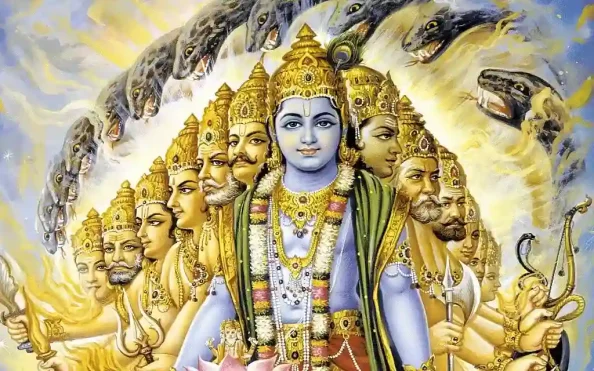
Bhagavad Gita Chapter 4: Jnana Yoga
The Yoga of Spiritual Knowledge: Finding the True Self
Introduction: Bhagavad Gita Chapter 4—Attaining the Ultimate Truth through Spiritual Knowledge. This chapter outlines the achievement of Yoga through divine knowledge of the Atman (Soul), the Supreme Divine, and the relationship between the two. Such knowledge purifies and liberates the human self, being the fruit of selfless devotion known as Karma Yoga.
Table of Contents
The Eternal Tradition (Gita 4:1-10)
4:1
śrī-bhagavān uvāca
imaṁ vivasvate yogaṁ proktavān aham avyayam
vivasvān manave prāha manur ikṣvākave’bravīt
The Blessed Lord said: “I revealed this imperishable science of Yoga to Vivasvān, the Sun-god; Vivasvān passed it to Manu, the father of mankind; and Manu taught it to King Ikṣvāku.”
4:2
evaṁ paramparā-prāptam imaṁ rājarṣayo viduḥ
sa kāleneha mahatā yogo naṣṭaḥ parantapa
“This supreme science was thus received through an unbroken line of spiritual succession, and the Rājarṣis (Saintly Kings) understood and practiced it. But in the course of time, the succession was broken, and the science as it is appeared to be lost.”
4:3
sa evāyaṁ mayā te’dya yogaḥ proktaḥ purātanaḥ
bhakto’si me sakhā ceti rahasyaṁ hy etad uttamam
“That very ancient science of Yoga is today told by Me to you because you are My devotee as well as My friend; therefore you can understand the transcendental mystery of this science.”
4:4
arjuna uvāca
aparaṁ bhavato janma paraṁ janma vivasvataḥ
katham etad vijānīyāṁ tvam ādau proktavān iti
Arjuna asked: “Vivasvān was born much earlier than You. How then am I to understand that in the beginning You instructed him?”
4:5
śrī-bhagavān uvāca
bahūni me vyatītāni janmāni tava cārjuna
tāny ahaṁ veda sarvāṇi na tvaṁ vettha parantapa
The Blessed Lord said: “Many, many births both you and I have passed. I can remember all of them, but you cannot, O subduer of the enemy!”
4:6
ajo’pi sann avyayātmā bhūtānām īśvaro’pi san
prakṛtiṁ svām adhiṣṭhāya saṁbhavāmy ātma-māyayā
“Although I am unborn and My transcendental body never deteriorates, and although I am the Īśvara (Lord) of all living entities, I still appear in every millennium in My original transcendental form by My own Māyā—the power that makes the One appear as Many.”
4:7
yadā yadā hi dharmasya glānir bhavati bhārata
abhyutthānam adharmasya tadātmānaṁ sṛjāmy aham
“Whenever and wherever there is a decline in Dharma (righteousness), O descendant of Bharata, and a predominant rise of Adharma (unrighteousness)—at that time I manifest Myself.”
4:8
paritrāṇāya sādhūnāṁ vināśāya ca duṣkṛtām
dharma-saṁsthāpanārthāya saṁbhavāmi yuge yuge
“To deliver the pious and to annihilate the miscreants, as well as to reestablish the principles of Dharma, I Myself appear, age after age.”
4:9
janma karma ca me divyam evaṁ yo vetti tattvataḥ
tyaktvā dehaṁ punar janma naiti mām eti so’rjuna
“One who knows the transcendental nature of My appearance and activities does not, upon leaving the body, take his birth again in this material world, but attains My eternal abode, O Arjuna.”
4:10
vīta-rāga-bhaya-krodhā man-mayā mām upāśritāḥ
bahavo jñāna-tapasā pūtā mad-bhāvam āgatāḥ
“Being freed from attachment, fear, and anger, being fully absorbed in Me and taking refuge in Me, many persons in the past became purified by the fire of self-knowledge—and thus they all attained My divine consciousness.”
Action and Inaction (Gita 4:11-20)
4:11
ye yathā māṁ prapadyante tāṁs tathaiva bhajāmy aham
mama vartmānuvartante manuṣyāḥ pārtha sarvaśaḥ
“As all surrender unto Me, I reward them accordingly. Everyone follows My path in all respects, O son of Pṛthā.”
4:13
cātur-varṇyaṁ mayā sṛṣṭaṁ guṇa-karma-vibhāgaśaḥ
tasya kartāram api māṁ viddhy akartāram avyayam
“The four divisions of human society (Catur-varnya) were created by Me according to the three modes of material nature and the work associated with them. Although I am the creator of this system, you should know that I am yet the non-doer, being unchangeable.”
4:18
karmaṇy akarma yaḥ paśyed akarmaṇi ca karma yaḥ
sa buddhimān manuṣyeṣu sa yuktaḥ kṛtsna-karma-kṛt
“One who sees inaction in action, and action in inaction, is intelligent among men, and he is in the transcendental position, although engaged in all sorts of activities.”
4:19 yasya sarve samārambhāḥ kāma-saṅkalpa-varjitāḥ jñānāgni-dagdha-karmāṇaṁ tam āhuḥ paṇḍitaṁ budhāḥ
“One whose every undertaking is free from worldly desires and expectations of reward—whose every action is purified by the Fire of True Wisdom—is called a wise person or a Paṇḍit by those who possess spiritual knowledge.”
4:20 tyaktvā karma-phalāsaṅgaṁ nitya-tṛpto nirāśrayaḥ karmaṇy abhipravṛtto’pi naiva kiñcit karoti saḥ
“Having abandoned all attachment to the fruits of their actions, and remaining ever satisfied and independent of worldly objects—such a person, though fully engaged in work, truly performs no action at all (they are free from the bonds of Karma).”
The Yoga of Self-Control (Gita 4:21-32)
4:21 nirāśīr yata-cittātmā tyakta-sarva-parigrahaḥ śārīraṁ kevalaṁ karma kurvan nāpnoti kilbiṣam
“One who has mastered his mind and self, and has abandoned all sense of ownership over worldly objects, incurs no sin even while performing purely physical actions.”
4:22 yadṛcchā-lābha-santuṣṭo dvandvātīto vimatsaraḥ samaḥ siddhāv asiddhau ca kṛtvāpi na nibadhyate
“One who is satisfied with what comes of its own accord, who is free from the dualities of life, free from envy, and steady in both success and failure—such a person is never bound by their actions, even while engaged in work.”
4:23 gata-saṅgasya muktasya jñānāvasthita-cetasaḥ yajñāyācarataḥ karma samagraṁ pravilīyate
“For one who is devoid of attachment, ego, and the sense of ‘mine’; whose consciousness is firmly established in True Knowledge; and who works in the spirit of sacrifice (Yajña) — all the consequences of their actions are completely dissolved.”
4:24 brahmārpaṇaṁ brahma havir brahmāgnau brahmaṇā hutam brahma melva tena gantavyaṁ brahma-karma-samādhinā
“The offering is Brahman (The Supreme Spirit); the act of offering is Brahman; and by Brahman, it is offered into the fire of Brahman. One who sees Brahman in every action surely attains Brahman.”
4:25 daivam evāpare yajñaṁ yoginaḥ paryupāsate brahmāgnāv apare yajñaṁ yajñenaivopajuhvati
“Some Yogīs offer sacrifices to the demigods or the powers of nature. Others offer their very ‘self’ as a sacrifice into the Fire of Brahman.”
4:26 śrotrādīnīndriyāṇy anye saṁyamāgniṣu juhvati śabdādīn viṣayān anya indriyāgniṣu juhvati
“Some offer the sense of hearing and other senses into the Sacred Fire of self-control; others offer sound and other sense objects into the blazing Fire of the senses
4:27 sarvāṇīndriya-karmāṇi prāṇa-karmāṇi cāpare ātma-saṁyama-yogāgnau juhvati jñāna-dīpite
“Others offer all the activities of the senses and the functions of Prāṇa (life energy) into the fire of the Yoga of Self-Control, which is kindled by True Knowledge.”
4:28 dravya-yajñās tapo-yajñā yoga-yajñās tathāpare svādhyāya-jñāna-yajñāś ca yatayaḥ saṁśita-vratāḥ
“Some sacrifice their material possessions; some practice austerities; some practice Yoga; some follow strict spiritual vows; and others offer the knowledge gained from studying the scriptures into the Sacred Fire of Wisdom.”
4:29-30 apāne juhvati prāṇaṁ prāṇe’pānaṁ tathāpare… “There are those who offer the indrawn breath into the outgoing breath, and the outgoing breath into the indrawn breath, practicing Prāṇāyāma (breath control). Others control their diet and offer their very life energy into the preservation of life. All these seekers understand the meaning of sacrifice and are thus purified of their faults.”
4:31 yajña-śiṣṭāmṛta-bhujo yānti brahma sanātanam nāyaṁ loko’sty ayajñasya kuto’nyaḥ kuru-sattama
“O Arjuna, those who partake of the Amṛta (nectar) remaining from a sacrifice reach the Eternal Brahman. But for those who perform no sacrifice, there is no happiness in this world, let alone in the next.”
4:32 evaṁ bahu-vidhā yajñā vitatā brahmaṇo mukhe karma-jān viddhi tān sarvān evaṁ jñātvā vimokṣyase
“Thus, many forms of sacrifice are spread out before the face of Brahman (through the Vedas). Know that all of them involve right action. With this understanding, you shall be liberated.”
The Sacrifice of Knowledge (Gita 4:33-42)
4:33
śreyān dravya-mayād yajñāj jñāna-yajñaḥ parantapa
sarvaṁ karmākhilaṁ pārtha jñāne parisamāpyate
“O chastiser of the enemy, the sacrifice performed in knowledge is greater than the mere sacrifice of material possessions. After all, O son of Pṛthā, all sacrifices of work culminate in transcendental knowledge.”
4:34
tad viddhi praṇipātena paripraśnena sevayā
upadekṣyanti te jñānaṁ jñāninas tattva-darśinaḥ
“Just try to learn the truth by approaching a spiritual master. Inquire from him submissively and render service unto him. The self-realized souls can impart knowledge unto you because they have seen the truth.”
4:38
na hi jñānena sadṛśaṁ pavitram iha vidyate
tat svayaṁ yoga-saṁsiddhaḥ kālenātmani vindati
“In this world, there is nothing so sublime and pure as transcendental knowledge. One who has become accomplished in the practice of Yoga enjoys this knowledge within himself in due course of time.”
4:42
tasmād ajñāna-sambhūtaṁ hṛt-sthaṁ jñānāsinātmanaḥ
chittvainaṁ saṁśayaṁ yogam ātiṣṭhottiṣṭha bhārata
“Therefore, the doubts which have arisen in your heart out of ignorance should be slashed by the weapon of knowledge. Armed with Yoga, O Bhārata, stand up and fight.”
Thus ends the Fourth Conversation of the Bhagavad Gita, Chapter 4.
Closing Prayer:
“Oṁ Sarveṣāṁ Svastir Bhavatu, Sarveṣāṁ Śāntir Bhavatu, Sarveṣāṁ Pūrṇam Bhavatu, Sarveṣāṁ Maṅgalaṁ Bhavatu”
Meaning: May all beings be blessed with well-being; may all beings experience peace; may all beings attain perfection; and may all beings encounter divinity.
Translation by: Anand Krishna
Source: bhagavadgita.or.id




Tinggalkan Balasan