
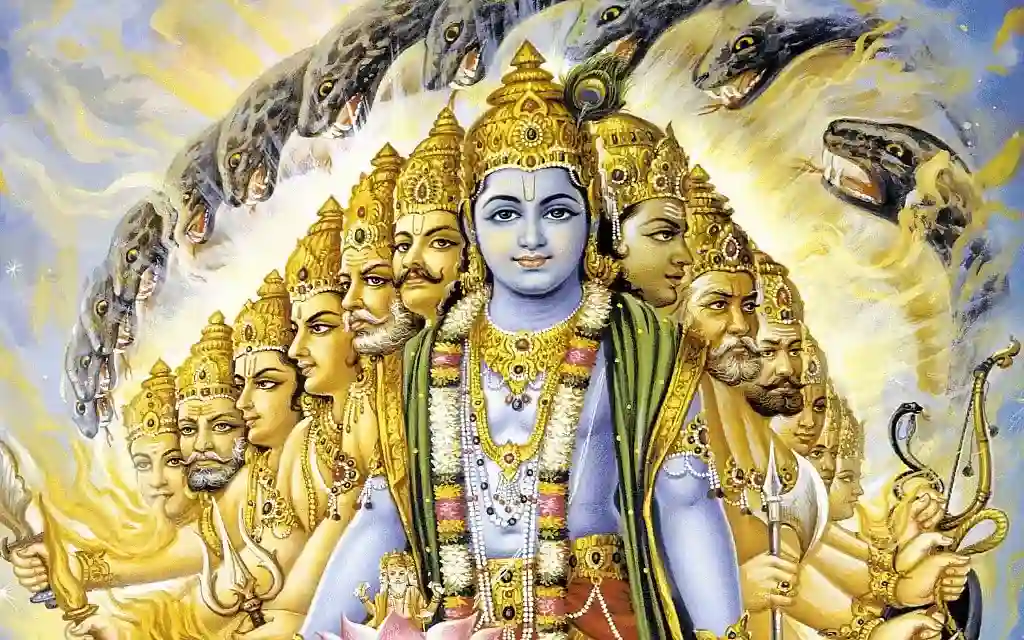
Bhagavad Gita Chapter 15 | The Supreme Person: The Union of Soul and Supersoul
Gita Chapter 15 – Purushottama Yoga: This discourse elaborates on the Yoga of the Supreme Person and the nature of Divinity. The primary goal of Vedic knowledge is to liberate oneself from the attachments of the material world.
Table of contents
Chapter 15:1-5 — The Symbolism of the Inverted Ashvattha Tree
15:1 śrī-bhagavān uvāca ūrdhva-mūlam adhaḥ-śākham aśvatthaṁ prāhur avyayam chandāṁsi yasya parṇāni yas taṁ veda sa veda-vit
The Blessed Lord (Krishna) said: “Those who understand Existence as the Eternal Aśvattha Tree (resembling a Banyan), with its roots above in the Pure Consciousness of the Supreme Soul; its trunk as Brahmā or the Creator; and its branches and leaves spreading downward as the knowledge originating from the Eternal Source—they have truly understood the essence of the Vedic teachings.”
15:2 adhaś cordhvaṁ prasṛtās tasya śākhā guṇa-pravṛddhā viṣaya-pravālāḥ adhaś ca mūlāny anusantatāni karmānubandhīni manuṣya-loke
“Nourished by the three modes of nature—Sattva, Rajas, and Tamas—the branches of this tree spread both upward and downward. Interaction with the world of matter gives birth to new buds, and new roots also creep downward, spreading in all directions. Thus, all types of karma, events, and attachments occur within the material realm.”
Chapter 15:3-4
na rūpam asyeha tathopalabhyate nānto na cādir na ca sampratiṣṭhā aśvattham enaṁ su-virūḍha-mūlam asaṅga-śastreṇa dṛḍhena chittvā
tataḥ padaṁ tat parimārgitavyaṁ yasmin gatā na nivartanti bhūyaḥ tam eva cādyaṁ puruṣaṁ prapadye yataḥ pravṛttiḥ prasṛtā purāṇī
“From the perspective of the material world, it is difficult to see this tree in its entirety; it is also hard to find its beginning or its end. However, this tree can be cut down using the Axe of Detachment.”
“Thus, (after felling the Tree of Existence with the axe of detachment), one should strive to reach the supreme goal (Consciousness of the Supreme Soul), from which, once attained, there is no more rebirth in this material world. Take refuge in Him who is the Source of everything.”
15:5 nirmāna-mohā jita-saṅga-doṣā adhyātma-nityā vinivṛtta-kāmāḥ dvandvair vimuktāḥ sukha-duḥkha-saṁjñair gacchhanty amūḍhāḥ padam avyayaṁ tat
“Those who are free from pride and illusion, and have conquered the evil of attachment; who are constantly centered in the Consciousness of the Supreme Soul; whose desires have ended; and who are no longer affected by the dualities of pleasure and pain—they are truly free from all doubts and have reached the Supreme and Eternal Goal (oneness with the Supreme Soul).”
Chapter 15:6-11 — The Journey of the Individual Soul (Jivatma)
15:6 na tad bhāsayate sūryo na śaśāṅko na pāvakaḥ yad gatvā na nivartante tad dhāma paramaṁ mama
“The sun, the moon, and fire are no longer needed to illuminate Him; after reaching Him, one is not reborn in the material world. That is Param-Dhāma, My Supreme Abode (the Consciousness of the Supreme Soul).”
15:7 mamaivāṁśo jīva-loke jīva-bhūtaḥ sanātanaḥ manaḥ-ṣaṣṭhānīndriyāṇi prakṛti-sthāni karṣati
“The Jīvātmā, the Individual Soul within the world and material nature, is truly eternal, for it is a fragment of Me. It is the soul that gathers (and interacts with) the five senses and the mind, all of which are parts of Prakṛti, the Material Nature.”
Chapter 15:8-9
śarīraṁ yad avāpnoti yac cāpy utkrāmatīśvaraḥ gṛhitvaitāni saṁyāti vāyur gandhān ivāśayāt
śrotraṁ cakṣuḥ sparśanaṁ ca rasanaṁ ghrāṇam eva ca adhiṣṭhāya manaś cāyaṁ viṣayān upasevate
“As the wind carries fragrance or aroma from one place to another, so the Individual Soul, having mastered the body for a time, carries the mind, feelings, and sensory perceptions when leaving it to enter another body it intends to inhabit.”
“When the Soul resides within and interacts with the senses of perception—namely hearing, sight, smell, taste, and touch—along with the mind, it enjoys all the triggering objects in this material world.”
Chapter 15:10-11
utkrāmantaṁ sthitaṁ vāpi bhuñjānaṁ vā guṇānvitam vimūḍhā nānupaśyanti paśyanti jñāna-cakṣuṣaḥ
yatanto yoginaś cainaṁ paśyanty ātmany avasthitam
yatanto’py akṛtātmāno nainaṁ paśyanty acetasaḥ
“The ignorant do not know the role of the Soul that animates the body and can leave it at any time; that it is also the Soul that enjoys the external triggering objects under the influence of the modes of Sattva, Rajas, and Tamas. Only the wise with clear vision understand this.”
“The Yogīs who strive, find the Supreme Soul within themselves (as the Individual Soul). But those who are ignorant and reluctant to strive do not find Him (they do not realize their true self).”
Chapter 15:12-15 — The Divine Presence in the Universe
Chapter 15:12-13-14
yad āditya-gataṁ tejo jagad bhāsayate’khilam
yac candramasi yac cāgnau tat tejo viddhi māmakam
gām āviśya ca bhūtāni dhārayāmy aham ojasā
puṣṇāmi cauṣadhīḥ sarvāḥ somo bhūtvā rasātmakaḥ
ahaṁ vaiśvānaro bhūtvā prāṇināṁ deham āśritaḥ
prāṇāpāna-samāyuktaḥ pacāmy annaṁ catur-vidham
“Know that the light of the sun that illuminates the earth, the light that illuminates the moon, and the light within the fire, all originate from Me.”
“It is My power that resides within the earth, fertilizing it and sustaining the lives of all beings. Through the moon, I also nourish all vegetation (especially those used for healing various diseases).”
“As the fire of digestion within the bodies of all living beings, together with prāṇa (the life-force of inhalation) and apāna (the breath of exhalation), I digest the four types of food.”
15:15 sarvasya cāhaṁ hṛdi sanniviṣṭo mattaḥ smṛtir jñānam apohanaṁ ca vedaiś ca sarvair aham eva vedyo vedānta-kṛd veda-vid eva cāham
“I am seated within the hearts of every being as the controller; memory, knowledge, and forgetfulness—all originate from Me. I am the wisdom obtained through the deep study of the Vedas; I am the essence of the Vedas and the understanding behind them.”
Chapter 15:16-20 — Purushottama: The Supreme Spirit
15:16 dvāv imau puruṣau loke kṣaraś cākṣara eva ca kṣaraḥ sarvāṇi bhūtāni kūṭa-stho’kṣara ucyate
“The power or light of the Puruṣa—the Collective Soul—in this world, has a dual function: illuminating the perishable and the imperishable. Among these are the body, which is perishable; and the Individual Soul, which is imperishable.”
15:17 uttamaḥ puruṣas tv anyaḥ paramātmety udāhṛtaḥ yo loka-trayam āviśya bibharty avyaya īśvaraḥ
“However, the dual-function of the Puruṣa does not affect the Paramātmā or the Supreme Soul, who pervades the three worlds, upholding and sustaining the universe with all its contents; He who is Omnipresent, Eternal, and Everlasting.”
Chapter 15:18-20
yasmāt kṣaram atīto’ham akṣarād api cottamaḥ
ato’smi loke vede ca prathitaḥ puruṣottamaḥ
yo mām evam asammūḍho jānāti puruṣottamam
sa sarva-vid bhajati māṁ sarva-bhāvena bhārata
iti guhyatamaṁ śāstram idam uktaṁ mayānagha
etad buddhvā buddhimān syāt kṛta-kṛtyaś ca bhārata
“I transcend the field, the kṣetra, or the body that is undergoing decay; I am also higher than the Jīvātmā—the Individual Soul called imperishable. Therefore, the entire universe and the Vedas as the Source of Knowledge refer to Me as Puruṣottama or the Supreme Person—Paramātmā or the Supreme Soul.”
“O Arjuna, a wise person who realizes My nature as Puruṣottama—the Supreme Soul—truly knows all that needs to be known. Thus, with all their consciousness, they constantly worship Me, who pervades everything.”
“O Arjuna, thus I have shared this esoteric teaching; by contemplating it, one becomes wise. They fulfill their duties well and achieve self-perfection.”
Thus ends the Fifteenth Discourse of the Gita, Chapter 15.
“May all beings be well, may all beings be at peace, may all beings attain perfection, and may all beings experience divine glory.”
English Translation: PujaShanti
Analytical Insight: Gemini AI
Primary Source: bhagavadgita.or.id





Tinggalkan Balasan